By Shelley Neese
A Growing Movement
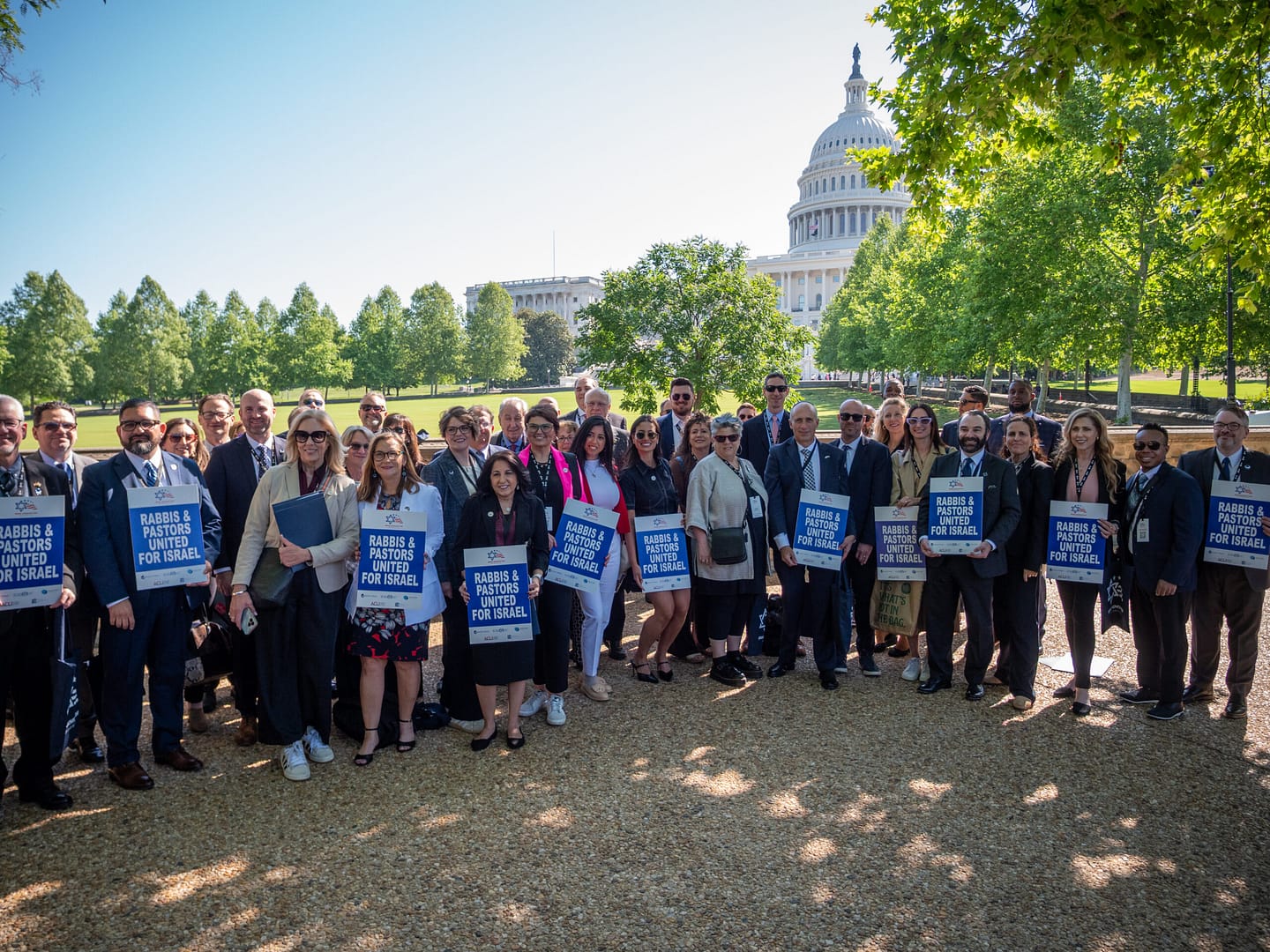
Since its inception following the tragic events of October 7, 2023, the advocacy day has doubled in size annually. It started as a spontaneous call out to faith leaders to do something together in the wake of the deadliest day for the Jewish people since the Holocaust. On that occasion, 70 rabbis, pastors, and religious leaders visited Capitol Hill and met with 32 lawmakers. In 2025, the event grew to include 300 Jewish and Christian leaders meeting with 100 lawmakers. In 2026, the number swelled again to over 400 pastors, rabbis, and faith leaders meeting with 120 House and Senate offices.
In 2024, much of the focus was on bringing hostages home safely while standing against Hamas. By the following year, the spotlight shifted to the broader regional threats facing Israel, including the growing influence of the Iranian axis and the persistent plight of hostages in Gaza. While our conversations on Capitol Hill centered more broadly on ensuring Israel’s long-term security and stability, another urgent concern has emerged closer to home: the troubling rise of antisemitism in America and the increasing risks facing houses of worship amid escalating political violence.
The three-day, three-location event kicked off with a gala at the Reagan Building. Jordanna McMillan, US Director of the Israel Allies Foundation, cast the vision for the coming days, saying, “As we prepare to celebrate America’s 250th anniversary this July, this moment is about defining what the next chapter of this nation will look like.” As a rallying call for the next day’s advocacy meetings, Bishop Robert Stearns, president of Eagles’ Wings, said, “This moment calls on faith leaders and elected officials to transform words into meaningful action.” On the last morning of the advocacy event, participants gathered at the Watergate Hotel for a substantive workshop covering everything from the history of Christian Zionism to just war theory.
Strength in Unity
On Tuesday, May 6, regional delegations of eight to ten members—a deliberate mix of rabbis and pastors—met with congressional representatives. This year, 100 members of ACLI joined the advocacy day efforts, and ICEJ USA sponsored 10 pastors from across the country to participate. For many of these pastors, advocating for Israel was a new experience. While their support often stems from reading the Bible, trips to the Holy Land, and personal convictions from the Holy Spirit, for some, articulating the strategic importance of the US-Israel relationship to congressional representatives was outside of their comfort zone.
While getting the chance to exercise their advocacy muscles for the first time is important, even more important are the relationships formed behind the scenes. Over the last three years, Israel Advocacy Day has sparked local Jewish-Christian initiatives across the United States. Between the advocacy meetings on Capitol Hill, they have plenty of time to connect over coffee in the Senate cafeteria and learn from one another how best to facilitate conversations with representatives. Stories have emerged from previous advocacy events in which rabbis and pastors swapped book recommendations for their Saturday and Sunday sermons. Pastors and rabbis created joint social media content for their local communities. And many pastors received their first invitations to Shabbat dinners at Jewish homes.
ICEJ USA Church Relations Coordinator and Pastor John Vedder described the experience as a turning point in the history of Jewish-Christian relations. For Vedder, the greatest takeaway was the “holy relationship building between pastors and rabbis.” First-time participant Pastor Shane Beeson echoed the sentiment. Beeson said, “I had more meaningful conversations with Jewish leaders between Monday and Wednesday than I’ve had in my entire life.” Dr. Tyson Lambertson, Director of Outreach for ICEJ USA, felt the experience of walking around Capitol Hill with pastors and rabbis and hearing them share their hearts strengthened his resolve “to keep pressing forward in standing with and comforting the Jewish people.”
The last three years have witnessed a staggering moral inversion on the global stage. It seems the world has turned upside down as public discourse increasingly frames Israel—the only democracy in the Middle East—as the primary evil force, while depicting Hamas and Iran as the victims. This cultural shift is the modern embodiment of the warning issued by the prophet Isaiah: “Woe to those who call evil good and good evil, who put darkness for light and light for darkness, who put bitter for sweet and sweet for bitter!” (5:20)
Supporting Israel means refusing to confuse light with darkness. In 1943, rabbis marched alone, their urgent pleas ignored by the White House. Since October 7, the landscape has fundamentally shifted. What was treated as a isolated Jewish issue in the 1940s is now recognized as a collective moral obligation. This duty falls on all American citizens committed to protecting our Judeo-Christian heritage, and on everyone who serves the one true God.
Co-hosts


Sponsors